Sales reward ideas that beat another gift card
 Tom Fitzgerald
October 14, 2026 · Updated October 14, 2026
Sales reward ideas that beat another gift card
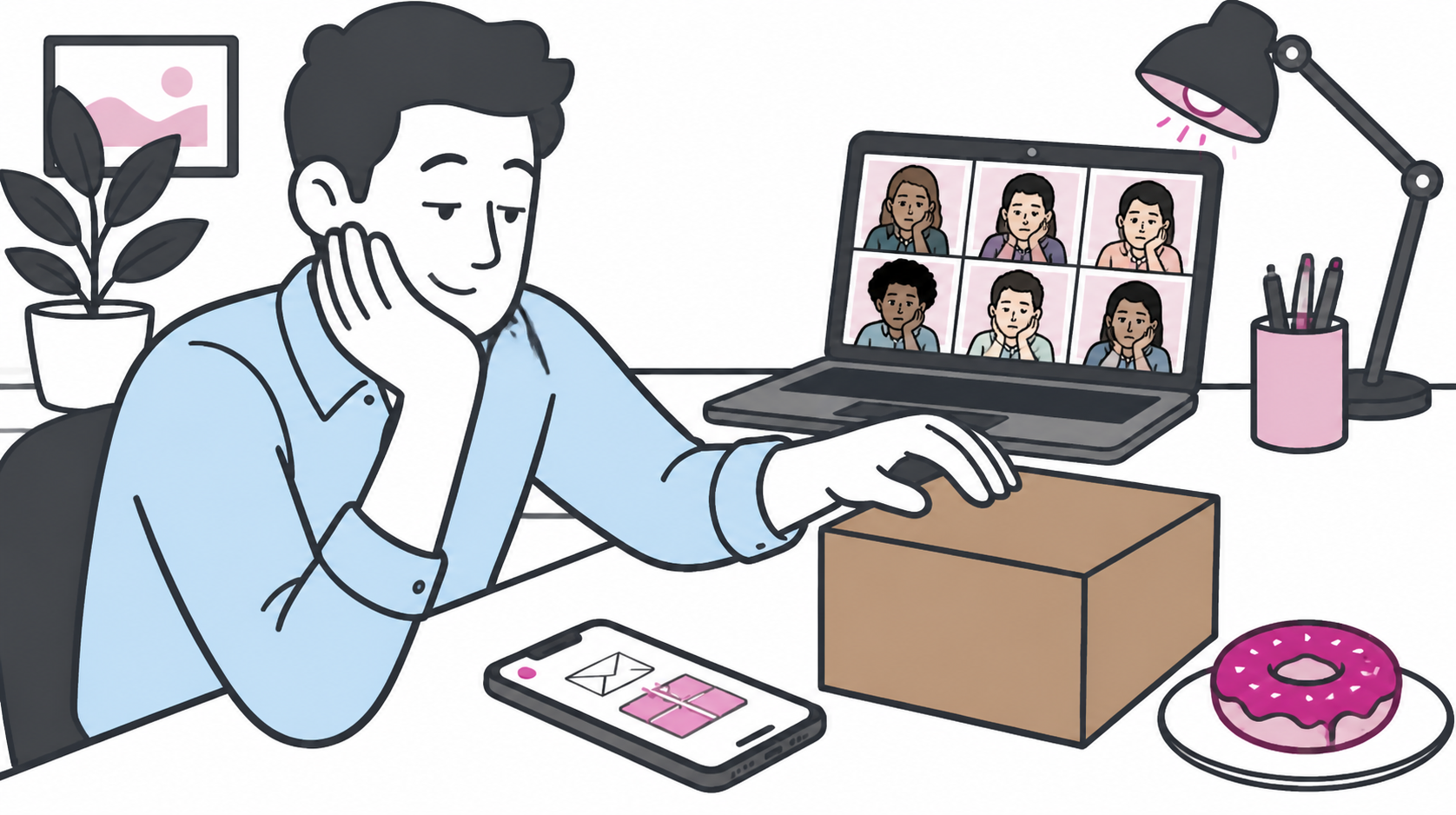
Gift cards and SPIFs still cover a mid-cycle win. A card for hitting a stretch target works. So does a cash SPIF when a region closes early. The problem shows up after the third or fourth one in a quarter. Remote reps cash the card, buy something useful, and the moment disappears. If you want sales reward ideas that still feel premium without waiting for the annual ceremony, experience-style incentives are worth a look.
The year-end recognition moment is covered in Virtual President’s Club Ideas to Reward High Achievers in 2026. This post is the mid-cycle incentive between that ceremony and another gift card. Spot wins, quota clubs, regional hits, a small group that cleared a pipeline goal ahead of schedule. The bar is lower than a trip and higher than another digital gift card balance.
In this guide
Gift cards versus experience incentives
Gift cards win on speed. You send a code the same afternoon someone hits the number. No shipping. No calendar. For a one-off, that is hard to beat.
Experience incentives win on memory and status. A remote rep who opens a kit at their desk and joins a live session has a story they tell on the next team call. The kit stays. The skill stays. Gift cards do not create a shared reference point across a distributed org the way a live session does.
For remote sales orgs the gap is sharper. Cash and cards arrive as email. An experience arrives as a box, then a call where people show up on camera with something in their hands. That matters when your top closer sits three time zones away from the rest of the pod. You are not replacing SPIFs. You are choosing when a card is enough and when the incentive needs to feel like recognition rather than reimbursement.
A practical split many enablement leads use for sales reward ideas:
- Use a gift card or SPIF when speed matters more than lasting impression, or when the win is individual and small.
- Use an experience when you want the incentive itself to signal that the win was meaningful, especially for a quota club or a regional hit that several people share.
Keep both tools. Match the tool to the win.
Individual recognition or a small team session
Not every mid-cycle win needs a group call. Some do.
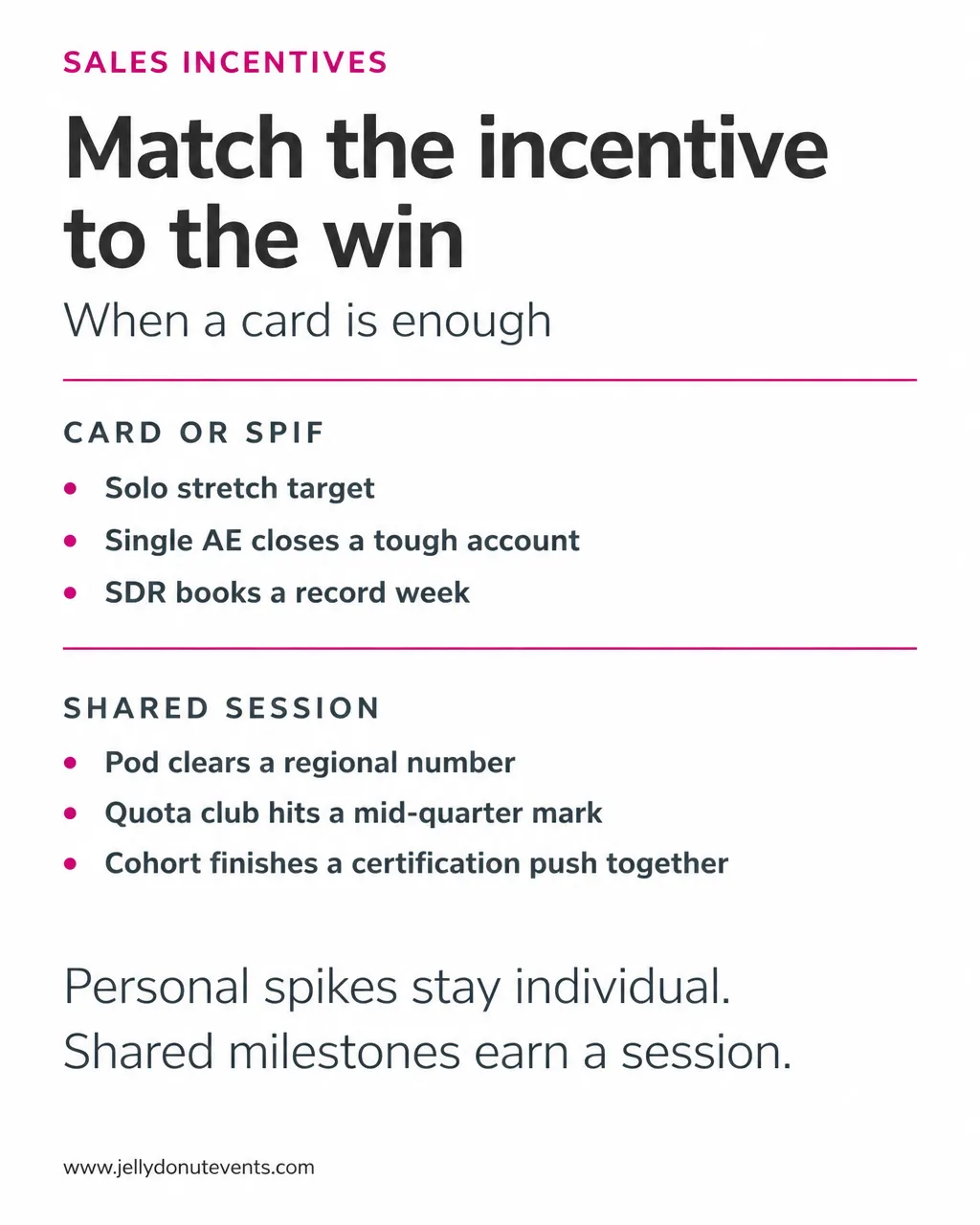
Individual incentives fit solo stretch targets, a single AE who crushed a tough account, or an SDR who booked a record week. A gift card, a bonus, or a personal note from leadership still works here. Shipping a full group experience for one person does not. Kit-based sessions have a floor, and running below it breaks the format.
A small team session fits when the win was collective. A pod that cleared a regional number. A quota club of eight or twelve who all hit a mid-quarter mark. An enablement cohort finishing a certification push together. In those cases the incentive is the shared win, and putting people on one call with the same kit in front of them reinforces that. What the sales team does together in that hour is a different job from the reward itself, and how to plan virtual sales team building activities that actually energize your team covers that side.
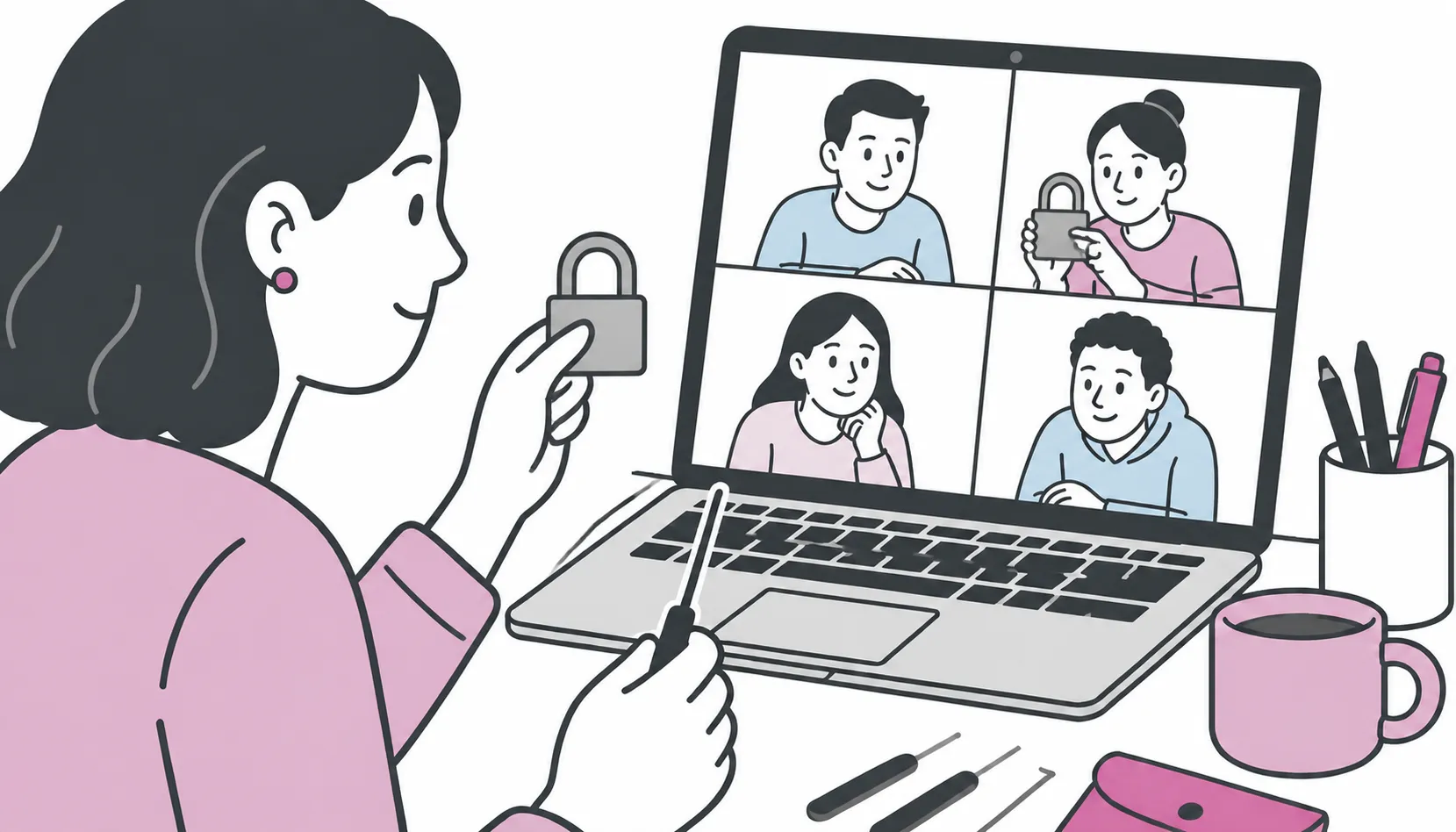
Minimum group size for the lock picking session is 8. It scales to 2,000 on a single call. If your winner list is three people, pick another incentive or expand the invite to a related cohort so the session has enough people to work. If your winner list is a full region, you can run one session for everyone without splitting the group. The whole group stays on one call.
Ask one question before you book: was this a personal spike or a shared milestone? Personal spikes stay individual. Shared milestones earn a session.
Logistics for remote incentives that ship
Experience incentives fail on logistics more often than on the idea. Remote orgs make that worse if you ignore lead time, time zones, and how you invite people without spoiling the surprise.
Shipping. Kits go out two weeks before the event date. We ship across North America, Europe, and Australia and New Zealand, so allow a little extra time for customs on international addresses. You supply the guest list. We handle address collection, calendar invites, links, reminders, shipping, and tracking. Build the two-week window into your SPIF calendar the same way you already build approval time into a bonus.
Time zones. Pick a start time the winning group can actually attend. A regional hit in one geography is easy. A quota club spread across coasts needs a compromise slot, not a default HQ hour. 60-minute and 90-minute formats both fit inside a normal afternoon block for most remote teams. Confirm the platform early. Zoom works. So does your Teams setup, or whatever video tool your org already uses.
Invites without spoiling the surprise. Common pattern: leadership announces that a specific cohort hit the number and that an incentive is coming, without naming the activity. Keep the guest list tight until the kits are in motion. You can tell winners what is coming once addresses are locked, or leave the activity unnamed until closer to the date. Early Slack leaks turn a premium incentive into a spoiled one.
EAs and enablement partners usually own this chain. Sales leaders set the criteria and the date. The booking side needs the list, the lead time, and a clear yes on whether the activity stays under wraps until packages arrive.
One shippable incentive experience
Among mid-cycle sales reward ideas, a live lock picking class is a clean fit when you want something you can ship and run the week someone hits a number.
I host it. My background is physical penetration testing, which is a polite way of saying I spent years getting into buildings to test security. Every attendee gets a kit with picks, tension tools, and three transparent practice padlocks, so they can see exactly what the pins are doing. The kit is theirs to keep. Sessions run 60 or 90 minutes. By the end of the session, everyone picks their first lock. The first-lock success rate is 99.9 percent, and I have taught over 10,000 people this way.
We keep the whole group on one call. No polls. No breakout rooms. I teach live, with close-up camera work so people can see what their hands should be doing. The padlock gets harder after the early win, so faster learners stay busy while others are still working toward their first open.
That is enough detail for most enablement conversations. If a lock picking session is the wrong tone for a particular cohort, use a different experience or stick with a gift card. The point is not that every mid-cycle win needs a kit. The point is that when you want an incentive that arrives at the door and finishes on a live call, this format is already built for that.
Details and options live on the Learn Lock Picking Virtual Event page. When you have a date and a guest list, you can book a session directly.
This week, if the win was shared and you have a date, book it. If it was one person, send the card.

Founder of Jelly Donut Events. Former physical penetration tester and award-winning coffee writer, now hosting live virtual events for remote teams.