Master the Art of the Pick: The Ultimate 2026 Guide to Virtual Lock Picking Classes
 Tom Fitzgerald
August 5, 2026
What is a Virtual Lock Picking Class?
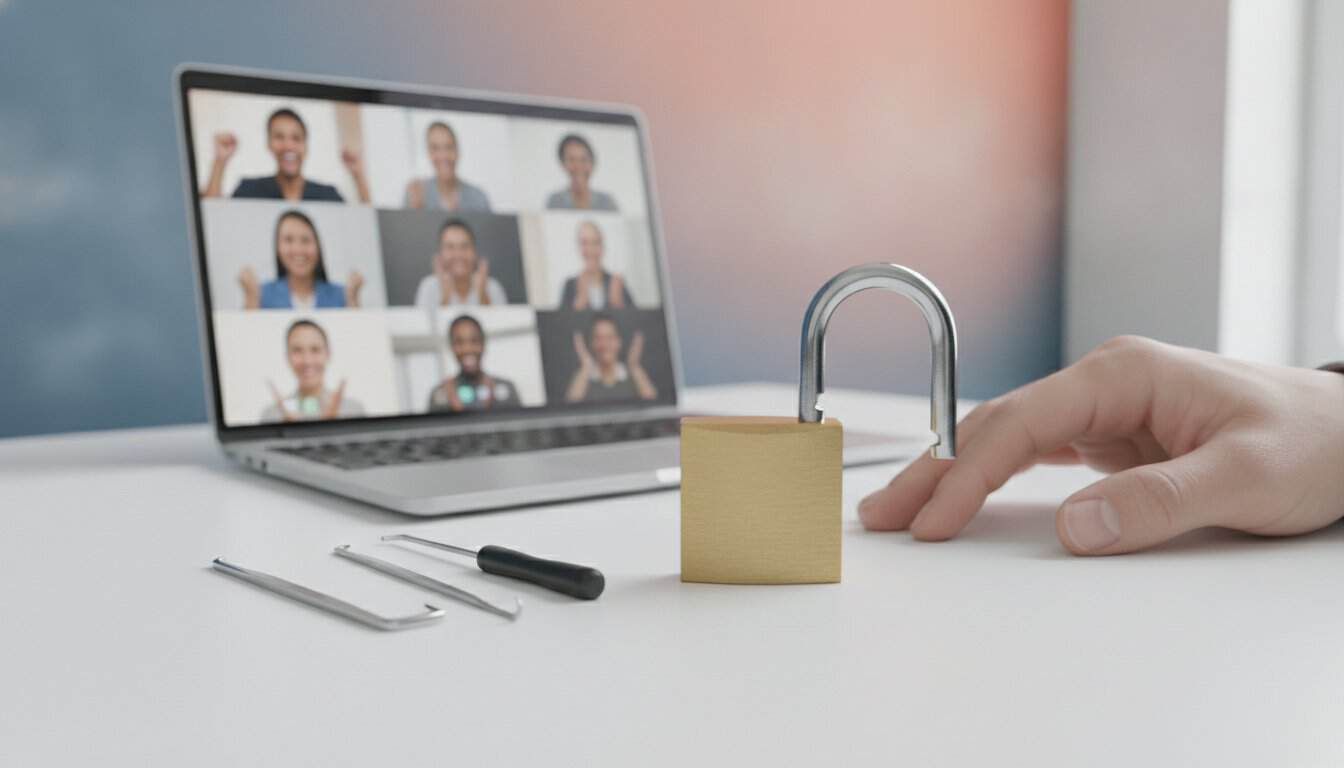
A virtual Lock picking class is a live workshop where an expert teaches your team a new, hands-on skill. I send a full kit of locks and tools to every person, and then I guide them through the process of picking their first lock over a video call. It’s a very tactile experience. In a world where most of our work happens through a screen, getting a physical kit in the mail creates a different kind of connection. It closes what I call the “tactile gap” of remote work, giving people something real to hold and manipulate.
For years, lock picking was seen as this mysterious, maybe even illegal, skill. My goal is to reframe it for what it is: a form of puzzle-solving. It’s a mechanical puzzle that teaches patience, focus, and a specific way of thinking. I often position it as an introduction to security research. You learn how a mechanism is supposed to work so you can understand its vulnerabilities. It’s about deconstruction and mastery, not anything malicious.
A Cure for Zoom Fatigue
I’ve seen enough glazed-over eyes on video calls to know that passive listening doesn’t work for team building. The reason this class is so engaging is that it involves kinesthetic learning. You’re not just watching me, you’re doing something with your hands. This kind of active learning gets people to focus in a way that a presentation or a digital game can’t. There’s a genuine sense of accomplishment when you feel the pins set and the lock pops open. It’s a real, physical win, and that feeling is much more satisfying than winning a round of online trivia. My job as the host is to create an environment where it’s safe to fail and fun to try. I keep the energy up and make sure everyone, from the CEO to the new intern, feels involved and capable.
Learning to Solve Problems Differently
The process of picking a lock is a perfect metaphor for professional problem-solving. Each pin inside the lock is a small, manageable part of a larger, more complex problem. You can’t force it. You have to feel for the subtle feedback the tool gives you, apply the right amount of tension, and address each pin one by one. It requires a lot of patience and focus. If one approach doesn’t work, you have to back off, reset, and try something different. This is lateral thinking in its purest form. I’ve had people from engineering, sales, and management teams tell me how this directly translates to their work. Whether you’re debugging code, navigating a tricky sales negotiation, or developing a new business strategy, the core skills are the same: break the problem down, stay patient, and be willing to change your approach.
In this guide
What to Look for in a Lock Picking Kit
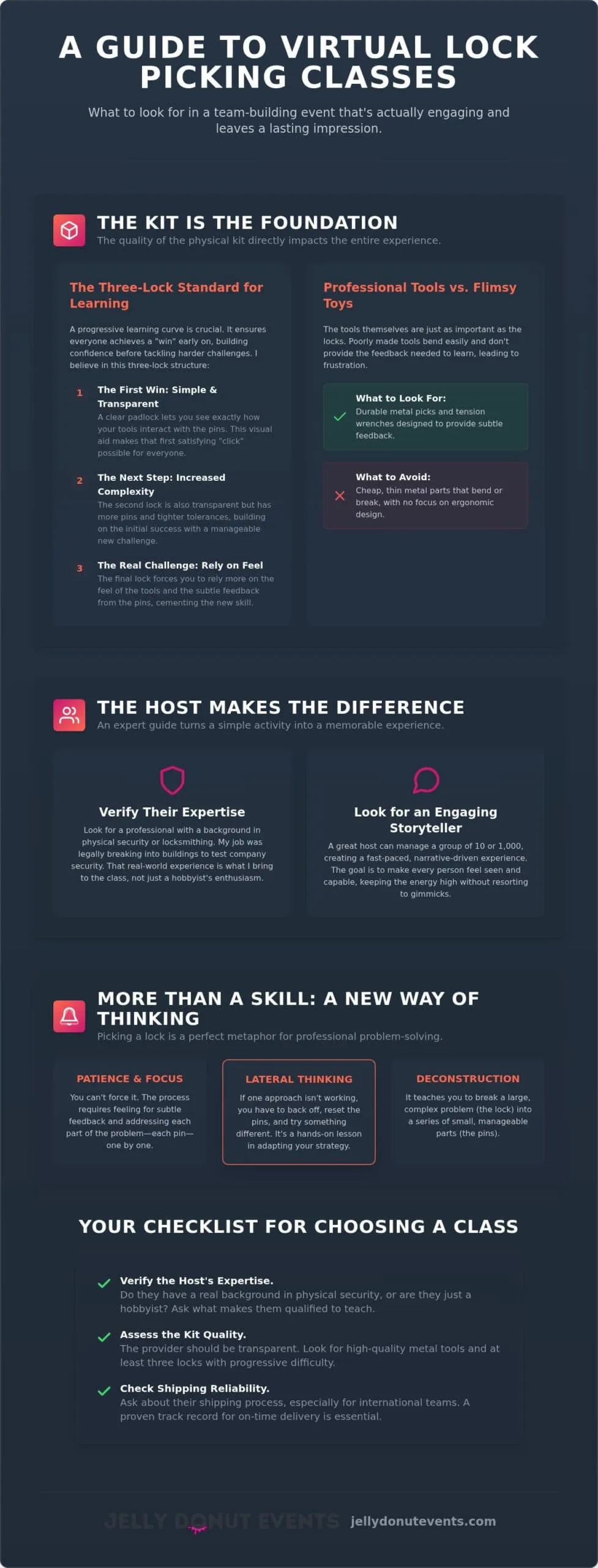
The quality of the kit you receive directly impacts the quality of the event. A professional-grade kit should have everything you need, with no cheap parts that will bend or break. The most important factor is a progressive learning curve built into the locks themselves. It’s crucial for team morale that everyone can achieve a “win” early on before moving to a harder challenge. I believe in a three-lock standard. This structure ensures that no one gets left behind and everyone feels a sense of accomplishment.
You also need to distinguish between real locksmith tools and flimsy toys. The picks and tension wrenches should be made from durable metal, designed to provide the subtle feedback you need to feel what’s happening inside the lock. A poorly made tool will just lead to frustration. While I don’t offer things like custom branded boxes or snacks (though if you are also coordinating a local event in Delaware, Sherm’s Catering is a reliable choice for high-quality food), the focus is entirely on the quality of the learning tools provided. The kit is the foundation of the entire experience.
Why We Use Transparent Locks
For a beginner, trying to picture the inner workings of a metal lock is nearly impossible. That’s why I start every class with transparent “cutaway” locks. Being able to see the pins, the springs, and the shear line is vital for understanding the mechanics. The first lock in my kit is a simple, clear padlock that lets you see exactly how your tools are interacting with the pins. This visual aid is what makes that first “click” possible for everyone.
The real satisfaction comes from building on that initial success. The second and third locks are also transparent, but they are progressively more difficult, with more pins and tighter tolerances. This setup allows you to test your new skills in a controlled way. You’re still working with a visual aid, but the challenge increases, forcing you to rely more on the feel of the tools rather than just your eyes. This progression from an easy win to a more complex puzzle is what makes the skill stick.
The Importance of an Expert Host
The person leading your class makes all the difference. Their background should give them the credibility to teach the skill and the experience to make it engaging. My background isn’t in information security, it’s in physical penetration testing. For years, my job was to legally break into buildings for companies to help them test their security. This experience taught me not only how locks work, but how to think about security as a system. It also taught me how to explain complex mechanical concepts in a simple, accessible way.
A great host can manage a group of 10 people or a group of 1,000 without the energy ever dipping. It’s about storytelling, connecting the mechanical process to bigger ideas, and making sure every single person feels seen and included. I don’t rely on gimmicks like polls; I focus on creating a fast-paced, narrative-driven experience where the lock itself is the main character and your team members are the heroes learning to master it.
How to Choose the Right Class for Your Team
When you’re looking for a virtual lock picking class, there are a few key things to evaluate to make sure you’re getting a professional and engaging experience for your team. Here’s a straightforward checklist to follow:
- Verify the host’s expertise. Look for someone with a real background in physical security or locksmithing. This isn’t just a hobby; you want a professional who can speak with authority and answer tough questions. Ask about their experience and what makes them qualified to teach.
- Assess the kit quality. A good provider will be transparent about what’s in their kits. You should be looking for high-quality metal tools and a set of at least three locks that offer progressive difficulty. If a company is vague about the number of locks or the type of tools, that’s a red flag.
- Check their shipping reliability. Ask about their shipping process, especially for international team members. They should have a clear system for tracking packages and a plan for what happens if a kit gets lost or delayed. Look for providers who have a proven track record of successful global delivery.
- Ensure the format is flexible. Corporate schedules are tight. A good class should be available in different lengths, such as 30, 60, or 90-minute versions, to fit into your team’s day. A one-size-fits-all approach often doesn’t work.
- Review the “fun factor.” The class should be more than just a technical lesson. Read reviews or ask the provider how the host keeps the event engaging. A great facilitator will weave in stories, trivia, and friendly competition to keep the energy high from start to finish.
Is This Legal and Ethical?
One of the first questions I always get from HR departments is about the legality and ethics of a lock picking class. It’s a valid concern. I make it very clear that what we are teaching is “locksport,” which is a legal and ethical hobby focused on understanding and solving mechanical puzzles. The golden rule is simple: never pick a lock that you don’t own or have explicit permission to pick. The class is framed as a security awareness exercise. By teaching your employees how to think like an attacker, you’re actually making them better defenders. It helps them appreciate the complexity of physical security and encourages a proactive security mindset, which is a valuable asset for any company.
Hosting for Large Groups
Running a smooth event for over 100 remote employees presents its own set of challenges. When you’re evaluating a provider for a large group, ask specifically how they manage engagement at scale. A single person talking on a webcam isn’t enough. Look for a setup that includes multiple camera angles, especially a high-definition macro camera focused on the host’s hands. This ensures everyone gets a clear, close-up view of the techniques being demonstrated. You should also confirm that the provider manages the technical side of the event, like the Zoom or Teams link and any necessary reminders. The last thing you want is to be troubleshooting tech issues for 100 people right as the event is supposed to start.
Shipping and Event Coordination
The experience starts long before the video call begins. It starts the moment the kit arrives at an employee’s doorstep. That’s why smooth logistics are so important. As a rule of thumb, kits should be shipped to arrive at least a week or two before the event date. This buffer accounts for any potential shipping delays and gives your team members peace of mind.
A good provider will have a system for handling everything, including international shipments. My process is built on clear communication. We use the right customs paperwork, describing the contents accurately as “hobbyist locksmith equipment,” to ensure a smooth journey across borders. My team handles all the tracking and keeps you and your attendees informed every step of the way. We can also take care of the RSVPs and calendar invites, so all your team has to do is show up ready to learn.
Shipping to Your Whole Team
Coordinating an event for a distributed team can be complex, especially with employees spread across different countries. I regularly ship to the US, Canada, the UK, and many countries in Europe. When choosing a provider, you should evaluate their global reach and their policies for handling exceptions. For instance, what happens if a kit is lost in transit? We always have a backup plan and can arrange for a replacement to be sent out quickly. We can also accommodate last-minute additions to the guest list, though it requires a bit more coordination. The goal is to make sure every single person on your team receives their kit on time, no matter where they are.
Making the Tech Easy
The technology behind a virtual event should be completely invisible to the participants. I believe in a “click and pick” experience. Your employees shouldn’t need any special software or technical skills to join. A full-service provider should manage all the event links, send out the reminders, and run the technical side of the call so you don’t have to. A critical piece of this is the video quality. Clear instruction is impossible without a high-definition macro camera focused on the lock and tools. This close-up view is non-negotiable for a hands-on skill like this, as it allows everyone to see the tiny movements that make all the difference.
Why I Started This Lock Picking Class
I started Jelly Donut Events because I saw a need for remote team building that was genuinely engaging. After years of sitting through boring virtual happy hours, I wanted to offer something different. Our Virtual Learn Lockpicking Class is the result of that mission. It’s designed to be an experience that creates real connection and leaves your team with a new, tangible skill.
My background in physical security gives me a unique perspective. I’m not just a hobbyist; I’ve spent years professionally analyzing and bypassing security systems. I bring that expertise to every class, but I do it with a “cool mentor” spirit. My goal is to turn a technical skill into a thrilling story. And behind the scenes, my team and I handle every single logistical detail, from shipping hundreds of kits around the world to managing all the RSVPs. You just tell us who to invite, and we take care of the rest.
Building a sense of community is a journey that continues beyond a single event; you can learn more about creating a dedicated digital ark platform for your team’s ongoing engagement.
My Approach to Hosting
My style as a facilitator is high-energy and encouraging. I work hard to bridge the gap between being a professional security expert and a playful guide. The class is built around a progressive challenge system. Everyone starts with an easy win, which builds the confidence needed to tackle the harder locks. This ensures that every person on your team, regardless of whether they’re “handy” or not, walks away feeling accomplished. I use sensory, action-oriented language to keep the energy up and make everyone feel like they’re part of a shared adventure.
Ready to Try It?
This class has been a hit with thousands of attendees from companies all over the world. It’s more than just a fun activity; it’s an opportunity for your team to build a shared narrative of discovery and success. If you’re ready to give your team an experience they’ll actually be talking about for weeks, I’d love to host a class for you.
Book your Virtual Learn Lockpicking Class with Jelly Donut Events today!
Frequently Asked Questions
Is a virtual lock picking class legal for my corporate team? Yes, it is completely legal. We teach lock picking as a puzzle-solving hobby, known as locksport. The guiding principle is to only pick locks you own. We frame the event as a security awareness and critical thinking exercise.
What exactly is included in the lock picking kits sent to my employees? Each kit includes a professional-grade set of metal lock picks and tension wrenches, along with three transparent practice padlocks of increasing difficulty. This allows participants to see the inner workings of the lock as they learn.
Do we need any special tools or software to participate in the class? No. All the necessary tools are included in the kit we ship. The event is hosted on a standard video conferencing platform like Zoom or Microsoft Teams, so your employees only need a computer with a webcam and an internet connection.
How long does a typical virtual lock picking workshop last? Our standard workshops are available in 30, 60, or 90-minute formats to fit your schedule. The 60-minute session is the most popular for corporate teams.
Can you ship lock picking kits to our international team members? Yes, we ship globally. We have extensive experience sending kits to the United States, Canada, the United Kingdom, and many countries throughout Europe. We handle all the logistics to ensure reliable delivery for your entire team.
What is the ideal group size for a virtual lock picking event? The event is designed to scale for groups of almost any size, from a small team of 10 to a large department of over 2,000. We use a multi-camera setup to ensure everyone has a clear view and feels engaged, no matter the group size.
Is the class too difficult for people who aren’t ‘handy’ or technical? The class is designed for absolute beginners. We start with a very simple lock and a clear explanation of the mechanics. The progressive difficulty of the locks ensures that everyone can learn at their own pace and achieve success. Most people are surprised by how quickly they pick it up.
What happens if an employee’s kit doesn’t arrive in time for the live event? We ship kits well in advance to minimize the chance of delays. In the rare case a kit is lost or significantly delayed, we have contingency plans in place, including options for reshipment or having the participant join in to watch and learn from their colleagues.

Founder of Jelly Donut Events. Former physical penetration tester and award-winning coffee writer, now hosting live virtual events for remote teams.